Kyushu Private Tour with Driver and Local Guide: 8 Days
Your own driver, your own English-speaking local guide, and seven nights on Japan’s southern island with a team who call Kyushu home.
- Licensed local guides
- Your own driver and vehicle
- Hotels and a ryokan night
- Light walking each day
Eight days to enjoy Kyushu at your own pace
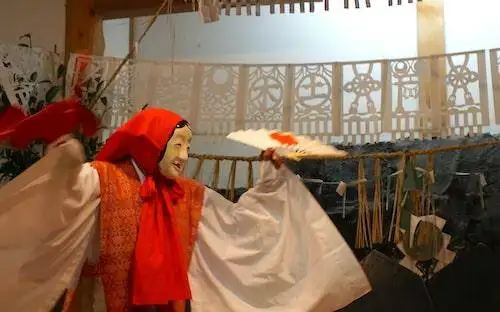
Based in Fukuoka, our team arranges every detail of your Kyushu private tour with a driver. Our guides plan the tours too, so the person answering your first email will often be the one guiding you. During the tour, they’ll point out the small details you might otherwise miss, such as the meaning behind the Kagura dance at Takachiho Shrine, or the seasonal dishes served at a Kaiseki dinner with its many courses.
As the tour is just for you and your travelling companions, you can choose where you may want to spend longer and explore more. Read our Google reviews below from friends and families of all ages who have travelled with us.
Travel well taken care of
We handle the planning and bookings, so you can focus on the journey.
8-day Kyushu itinerary with your driver and guide
Tap any day for a quick look — or open the full day-by-day itinerary.
Your guide and driver will meet you in the arrival halls at Fukuoka Airport. Then, with your bags loaded, you’ll drive inland through the mountains towards Oita.
The first stop is Hita. In the Edo period, most of Kyushu had local lords, but Hita answered directly to the Shogun. You’ll have time to explore its historic streets in Mameda-machi, where you’ll visit Kuncho, a sake brewery in an Edo-period storehouse. Tastings are recommended and part of the visit!
A short stroll away is a geta (wooden sandal) shop, where Japan’s largest geta is on show, made from local cedar. After, you’ll get to try Hita’s local speciality eel for lunch.
In the afternoon, you’ll continue to Beppu. At Umi Jigoku, or ‘Sea Hell’, the water is bright blue and around 98°C (208°F), with smaller red-orange ponds beside it. A minute’s walk away, grey mud bubbles up at Oniishibozu Jigoku.
Tonight’s hotel near Beppu Station has its own onsen (natural hot-spring bath), so you can enjoy your first hot-spring soak. Dinner is fresh local seafood at a restaurant in town.
After breakfast, you’ll leave Beppu and head up into the hills to Myoban. Inside its thatched huts, hot-spring steam rises through blue clay and slowly forms Yunohana, which are crystals used as bath salts. While you’re there, try an onsen egg cooked in the steam for a mid-morning snack.
Next, you’ll head to Kokonoe ‘Yume’ Otsurihashi. The bridge stands 173 metres high above the river, with views of Shindo Falls and the valley, which are exceptional in November for the autumn leaves.
In the afternoon, you’ll reach Takachiho. A 10-minute riverside walk leads to Amano Yasukawara, a cave where according to legend, the gods met to try to lure the sun goddess Amaterasu out of hiding.
Dinner will be local Takachiho beef. After, at 8pm, you’ll watch Kagura, a sacred dance performed every night at Takachiho Shrine. The first dances are serious, but the last is a comic scene between a husband-and-wife pair of gods. As the dancers usually throw treats into the audience, keep your hands ready!
Your morning starts with a stroll along the river through Takachiho Gorge. Its cliffs, up to 100 metres high, were formed from lava that flowed here from Mount Aso and cooled into tall columns. The path leads to the much-photographed Manai Falls, one of Japan’s top waterfalls.
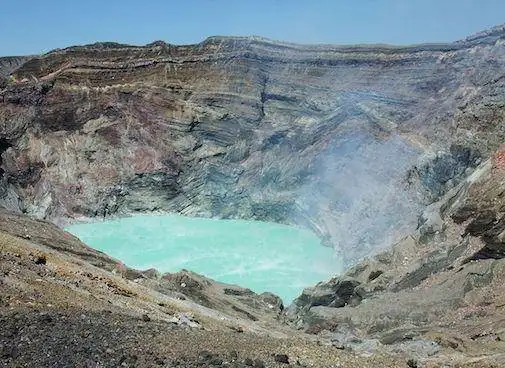
From there, it’s up into the hills to Mount Aso, which is an active volcano. Your guide will check the gas levels and crater access the day before, and again on the morning to see how close you can get. If the rim is open, it’s a short walk up to look into the steaming crater. If not, you’ll still get close enough to smell the sulphur!
Next, you’ll head out to Kusasenri, a grassy plain. This is one of our guides’ favourite views in Kyushu, with Mount Eboshi rising behind and horses often grazing.
Then it’s on to Kumamoto, whose castle is counted among Japan’s three great castles. From the top of its black main keep, you can look out across the city. Dinner is a Kumamoto speciality, chosen by our team.
Leaving Kumamoto in the morning, you’ll board the ferry across the Ariake Sea. During the one-hour crossing, you’ll pass nori seaweed farms, and from November to March you can even feed the seagulls from the deck.
The ferry lands at Shimabara, known as the ‘City of Water’, where you’ll see colourful koi swimming in the clear roadside channels. You can also watch the koi at Shimeiso, a traditional Japanese house with its own spring-fed garden pond.
Nearby are the old samurai houses. It doesn’t always happen, but if you’re lucky, a descendant of the samurai families will show you around, with your guide translating.
Later, on the way to Nagasaki, you’ll stop at Unzen Jigoku. Unlike the colourful ponds in Beppu, clouds of steam rise from the vents and make for a great photo stop.
Then in the evening, you’ll head up Mount Inasa for the night view over Nagasaki and its harbour. In 2021, it was named one of the world’s three great night views, alongside Monaco and Shanghai.

Few cities have a story like Nagasaki’s, so you’ll plan the morning with your guide, choosing from three themes.
Up on the hillside, Glover Garden is home to Japan’s oldest surviving wooden Western-style building, once the house of Scottish merchant Thomas Glover. Right next door is Oura Cathedral, Japan’s oldest surviving church, which became part of a UNESCO World Heritage site in 2018.
To learn what happened in August 1945, you can visit the Atomic Bomb Museum, then walk past the hypocentre to the Peace Park.
Or head to Dejima, a small fan-shaped island. For about 200 years, it was the only place in Japan where trade with the West was allowed.
In the afternoon, you’ll drive to Ureshino, one of Japan’s three great hot springs for beautiful skin, thanks to its silky water. Then in the evening, it’s on to your ryokan (traditional inn) stay. After a soak in its onsen, dinner is kaiseki, a meal of many small seasonal courses. Ask your guide about anything on your plate, as there’s always a reason why each ingredient is chosen.

Your last full day of touring with your guide starts with a hands-on green tea class in Ureshino. You’ll brew the tea yourself, then taste some of Japan’s best green tea.
After you’ll head to Okawachiyama, known as the ‘Village of Secret Kilns’. In the Edo period, potters here made porcelain for the Shogun and lords, and their methods were kept secret. The main street is lined with small pottery shops, so take your time as you might find a piece to take home.
Lunch is in Arita, often called the birthplace of Japanese porcelain. The restaurant also acts as a gallery of local porcelain, so when you order a coffee or tea, you’ll pick your cup from a wall of over 2,500 cups. After lunch, there’s time to wander the back streets, where some of the walls are made from old kiln bricks and bits of pottery.
Later, you’ll drive back to Fukuoka for a free evening. Your guide can suggest places to go, such as the riverside yatai (open-air food stalls) or a street full of ramen shops.

After breakfast at your hotel, the day is yours. Tenjin is the place for shopping, or you can take the train to Dazaifu, home to a famous shrine with a street of snack shops on the way. Many of these shops sell Umegae Mochi, a tasty rice cake baked golden brown and filled with sweet red bean paste. As the shrine honours the god of learning, you’ll often see students who come to pray for good exam results. Your guide will suggest places that really match your interests, including where to eat in the evening.

After breakfast and checkout, your guide and driver will take you to Fukuoka Airport for your flight home. The airport is a great spot for last-minute souvenirs. Mentaiko (spicy cod roe) is a Fukuoka speciality and is sold on its own or in snacks like rice crackers or prawn crackers. Another popular option is Hakata Torimon, a small baked bun filled with buttery bean paste. Your guide can suggest others worth taking a look at too.
For those staying longer in Kyushu, our team will be happy to arrange onward transport. We can also provide suggestions on how to make your trip smoother.

Kyushu private tour FAQs
Everything guests usually ask before booking. Anything else — just ask below.
Yes. As it’s just your group, you set the pace, with time to rest between stops. Child seats are provided, when Japanese law requires. For solo travellers and couples however, it can be expensive, because you’d be paying for a driver and guide between just one or two of you. Our Train Tour or Self-Drive Tour is usually better value for two people.
Your guide will be a fluent English speaker who lives here in Kyushu and holds Japan’s national guide interpreter licence, the government certification for professional guides. Your driver is a separate professional, so your guide can give your group their full attention instead of watching the road.
We know that driving in Japan isn’t for everyone, especially on the narrow mountain roads around Takachiho and Aso. With a driver, you can just sit back, really enjoy those views and even have a drink with dinner. Also, all our vehicles have green number plates. That means they’re licensed and insured to carry paying passengers, which a normal rental car isn’t. However, if you prefer to drive yourself, take a look at our Self-Drive Tour.
It depends how much you want to get out of each stop. We recommend having a guide, who can share all the stories behind the shrines and kilns which you won’t find online. You’ll also have someone who can rearrange parts of the day if something comes up. Without one, you still have your driver and the same hotels and ryokan night, but you’ll explore each place on your own.
We run this tour for private groups of 2 to 25 people. Groups of up to four travel in a Toyota Alphard, which is Toyota’s premium minivan. Groups of up to eight have a HiAce minibus, and larger groups travel by private coach. We always make sure the vehicle for the tour comfortably fits your group size and all your luggage.
Most days involve 1 to 2 km of walking in total. Days 2 and 3 are the busiest, with steps and slopes at the cave shrine and around Takachiho. If walking is difficult for anyone, we can adjust the route with a more gentle alternative.
Breakfast is included every day, and lunch and dinner are included on the guided days, apart from your first evening back in Fukuoka. Water and tea come with your meals. We’re flexible with dietary needs, but please let us know as soon as possible, so we can arrange all the meals for your tour. For a fully vegetarian or vegan trip, we would suggest our Vegetarian & Vegan Tour.
Your hotels are picked by our local team, and every room is en-suite. On Day 5, you’ll spend a night at a ryokan, a traditional Japanese inn with its own hot-spring baths. You’ll sleep in Japanese-style rooms on thick futon mattresses, which you may find even more comfortable than a bed. Dinner that evening is a Kaiseki meal that comes with several courses of seasonal and local dishes. It’s no wonder that many of our guests say the ryokan stay is a highlight of the tour.
Yes. Every tour can be adapted based on what most interests your group. If you love pottery, we can include a visit to Arita and Karatsu. These are two pottery towns near Okawachiyama on Day 6, where we can arrange a hands-on pottery workshop. If any place catches your eye, your guide can quickly adjust the schedule so you can spend more time there. You can also add nights before or after the tour, and we can book hotels for you.
Your guide is able to immediately work out a new plan on the day. For example, if the crater at Mount Aso closes because of high volcanic activity, we swap in a nearby alternative. Our local guides also know which backup routes to take if there’s a typhoon or when winter snow closes a road.
We’ve been running tours in Kyushu since 2018, and our guides and team all live locally. This gives us knowledge that a guide visiting from Tokyo or Osaka typically does not have. Our guides can tell you local stories on pottery villages, as well as give their recommendations on where to eat during your free day. We also provide real flexibility. If you’d like to change your itinerary, you’re talking straight to the people in Fukuoka who can make it happen, not an office in another city. You can read more about our team and guides on our About Us page.
Yes. We’re a travel agency registered with Fukuoka Prefecture (Category 2, No. 2-873), and under Japanese law we hold an ¥11 million bond to protect customers’ payments. Our Lifetime Payment Guarantee also covers you if your plans change.
Private tour pricing
Our 8-day Kyushu private tour with driver costs an estimated ¥615,000 per person, based on four travellers sharing twin rooms. Your guide travels with you for six days, and your hotels, ryokan night, entry tickets and airport pick-ups are all booked and paid for.
If you’d rather explore on your own, the same 8-day tour with just a private driver costs an estimated ¥420,000 per person, also based on four travellers sharing.
Every tour is completely customised to match your interests and needs. Also, keep in mind a group of eight pays less per person than a group of four, as the driver, guide and vehicle cost the same. All you need to book is a 20% deposit, with the rest due 60 days before your trip starts.
What’s included in the price
- Meet and greet at Fukuoka Airport, and your transfer back on the last day
- Your private driver and vehicle
- A licensed English-speaking guide for six days (guided option)
- Seven nights’ accommodation, including one ryokan night with Kaiseki dinner
- Breakfast every day, plus lunch and dinner on guided days (except your first evening back in Fukuoka)
- Entry fees and activities on the itinerary
What’s not included in the price
- International flights
- Drinks other than water and tea
- Meals on your free evening and free day in Fukuoka
- Single-room supplement
Cancellations and our Lifetime Payment Guarantee:
If you can’t travel, you can cancel under our normal booking terms or postpone and keep your payments as a Lifetime Credit. You can use it for any future Kyushu Journeys tour, whenever suits you. We only deduct costs we can’t recover, such as hotel charges within about two weeks of your arrival.
Start planning your Kyushu private tour
Tell us your travel dates, how many are in your group and what interests you most. We’ll come back to you with a suggested plan and start putting together your quote.