

Kyushu Cherry Blossom Tour 2028: 7-Day Small-Group Tour
Cherry blossoms at castle ruins, gardens and riverside parks, with a licensed local guide and no more than 12 guests.
- A guide who lives in Kyushu
- Up to 12 guests, guaranteed to run
- Four nights with onsen
- Easy walking, with steps optional
Now booking: Kyushu Cherry Blossom Tour, 28 March to 3 April 2028. The 2027 tour is full.
Cherry blossom season in Kyushu, with a small group and a guide
The Kyushu Cherry Blossom Tour runs for 7 days and 6 nights, from 28 March to 3 April 2028, when Kyushu's cherry trees usually bloom. Our guides live in Kyushu and help plan this tour. They chose these dates by comparing past bloom dates with the days our restaurants are open. A private bus takes the group from Fukuoka to Hita, Aso, Shimabara and Ureshino, then back through Arita. There are no more than 12 guests, and the tour is guaranteed to run. It suits people aged 12 and over who enjoy flowers, local food and onsen (natural hot-spring baths).
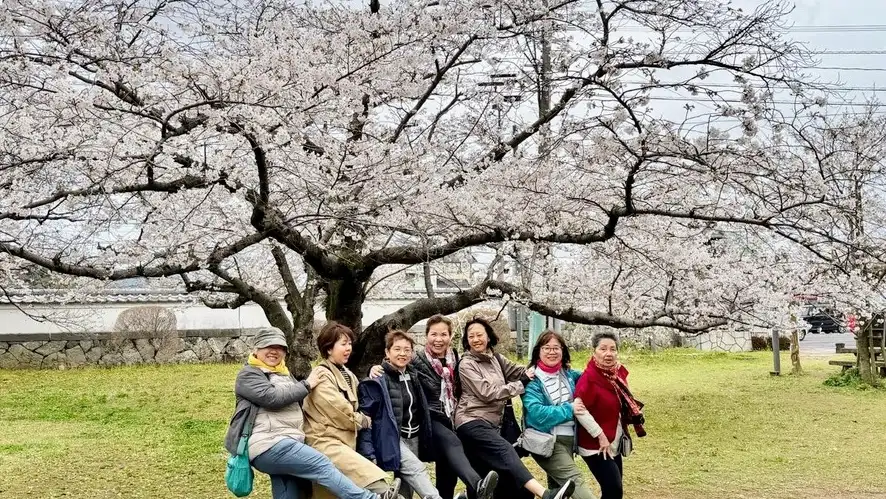
Our guides say the cherry blossoms are the highlight of the week. In spring, cherry trees bloom all along the route, beside small temples, schools and village parks as well as at the well-known spots. Guests often become friends during the week, and many share their photos in the group's WhatsApp chat each day.
The reviews below are from guests who joined our cherry blossom tours between 2024 and 2026.
What to expect on the Kyushu Cherry Blossom Tour
The tour starts and ends at the Nishitetsu Grand Hotel in Fukuoka, from Tuesday 28 March to Monday 3 April 2028. Your hotels, private bus, entrance fees, breakfast every day, 5 lunches and 4 dinners are all included.
7-day Kyushu cherry blossom tour itinerary
The tour begins and ends at the Nishitetsu Grand Hotel in Tenjin, Fukuoka. From there, the route heads inland to Akizuki and Hita, crosses the Aso volcano, then takes a ferry over the Ariake Sea to Shimabara. The last days pass through Unzen, Omura and Ureshino, and the pottery towns of Arita and Okawachiyama. Most drives take less than an hour. The longest, back to Fukuoka on Day 6, takes 1.5 to 2 hours.
There are no group activities on Day 1, so you can arrive whenever suits you. Fukuoka Airport is the nearest airport, and the subway runs straight from there to Tenjin station, about five minutes' walk from the hotel. We can also book a transfer from the airport at extra cost.
Check-in starts at 15:00. If your flight lands earlier, reception will keep your bags free of charge until your room is ready. Tenjin is Fukuoka's main shopping district, with department stores, restaurants and boat cruises on the river close by.
If you have a large suitcase, you can leave it at the hotel free of charge during the tour and collect it when you return on Day 6.

Your guide meets the group in the hotel lobby at 9:00. The first stop, about 1 hour 10 minutes away, is Akizuki, where about 200 cherry trees line Sugi-no-baba, the old road to the castle, for about 500 m. The castle, built in the 1620s, is gone, but its stone walls, moats and two gates remain.
Lunch is eel, grilled over charcoal with a sweet soy sauce, then steamed with rice in a wooden box.
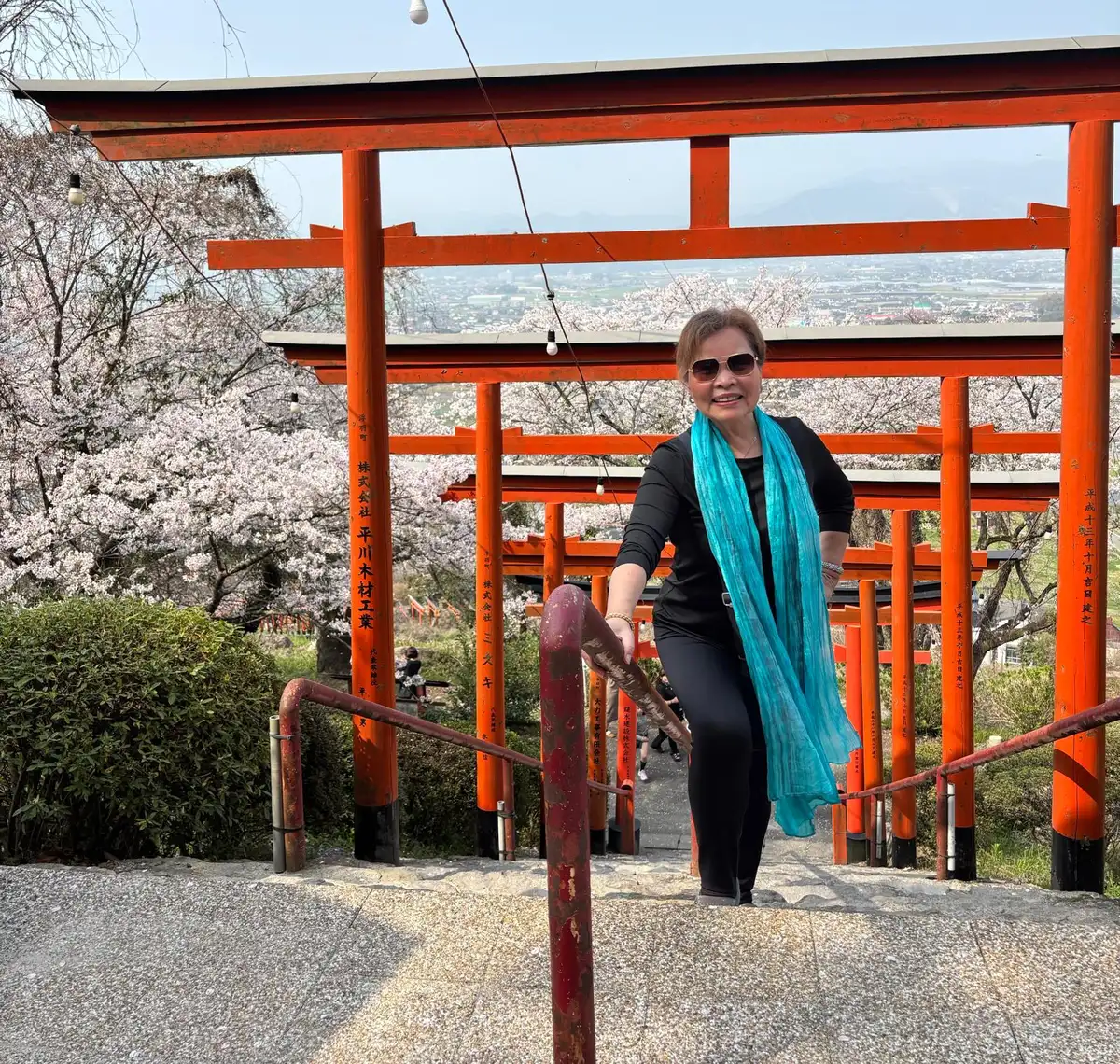
At Ukiha Inari Shrine, the bus drives up the hill for you. With 91 red torii gates and a view over the Chikushi plain, it is a good place for photos. From the top, you can walk down through the gates to meet the bus, or stay on board.
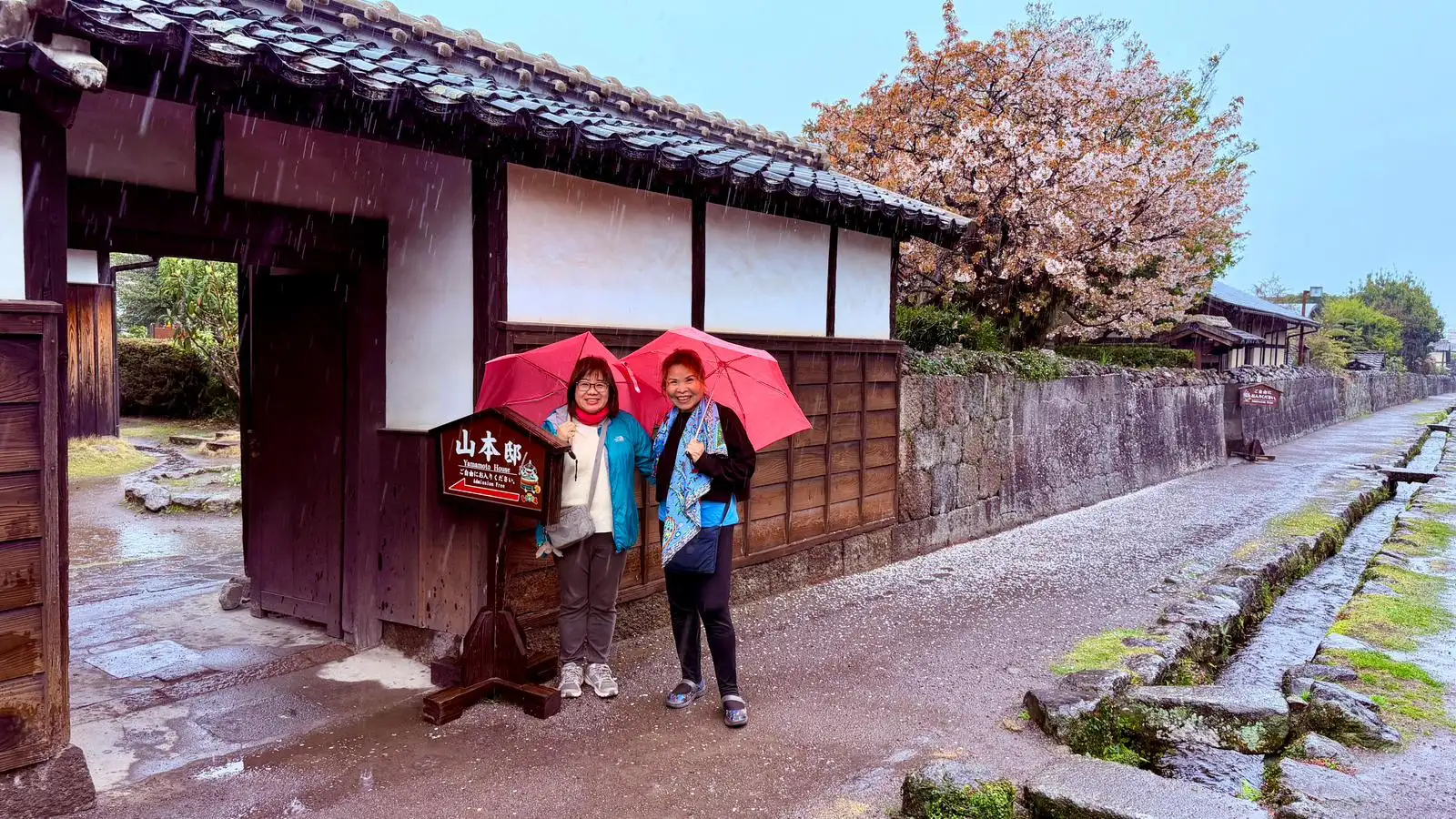
Mameda-machi, Hita's old merchant town, is known as the 'Little Kyoto of Kyushu'. Here, a sake brewery offers a tasting beside its small museum, and its oldest storehouse dates from 1702. Hita's hina doll festival usually runs until 31 March, so many old houses display dolls made for the Girls' Festival. Then there are 30 to 40 minutes free for the geta sandal and cutting board shops.
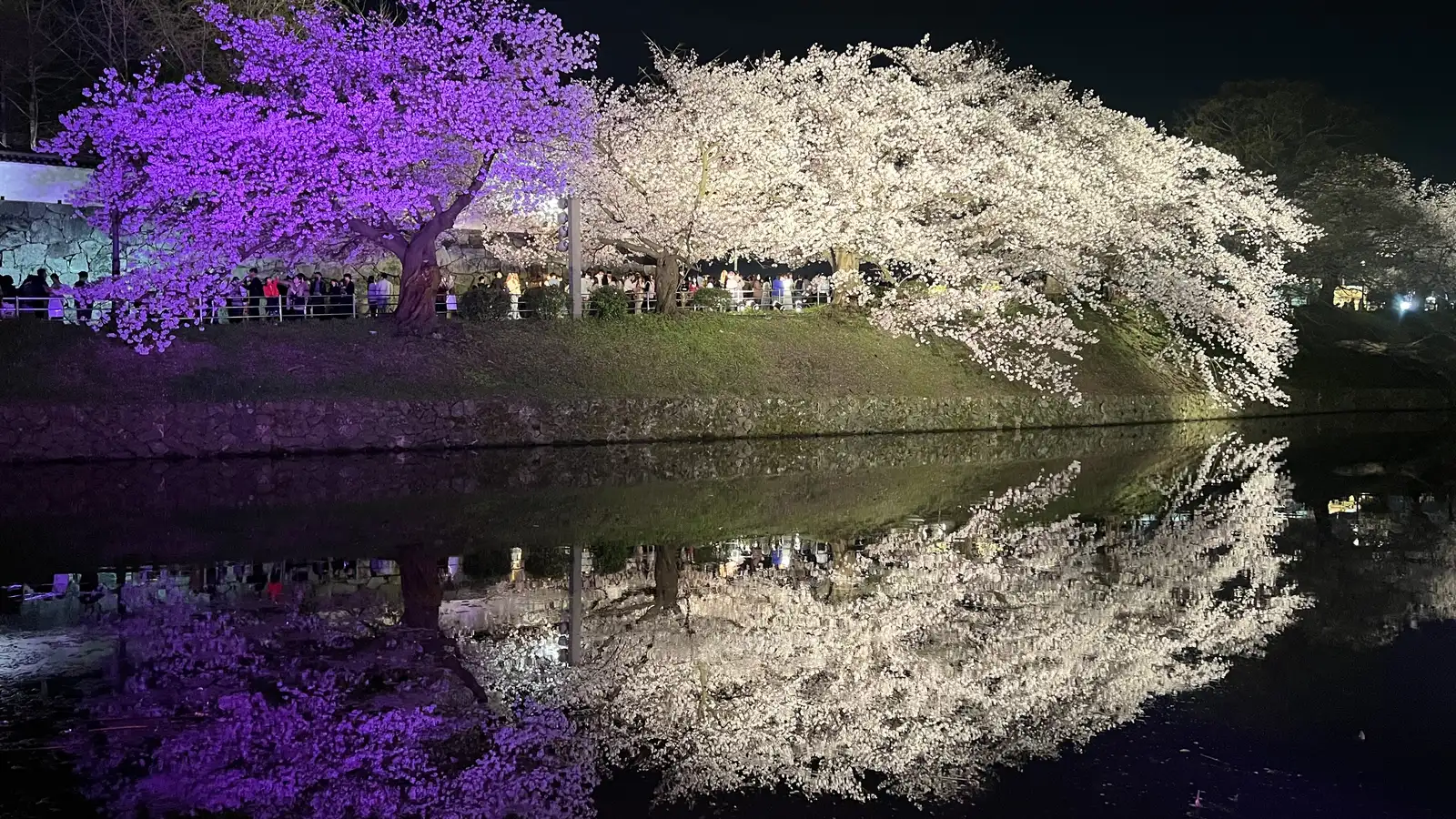
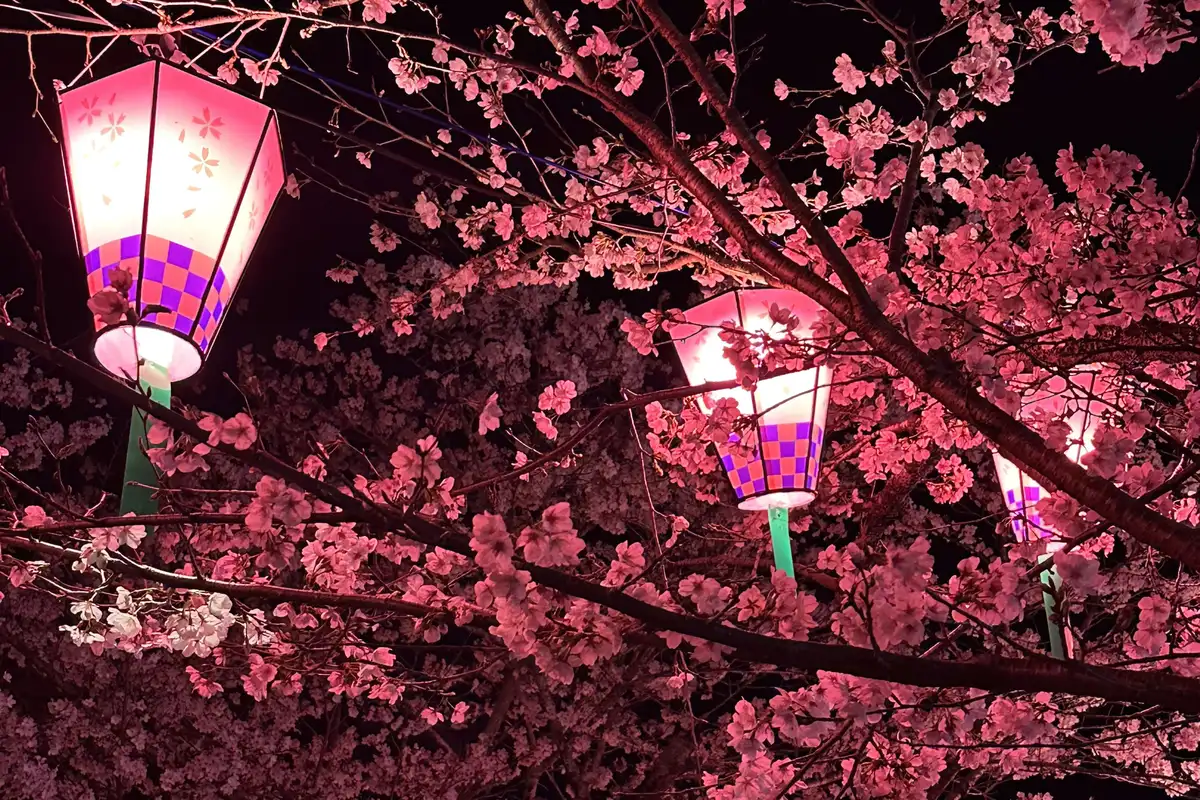
Tonight's hotel stands beside the Mikuma River, and your room has its own onsen bath. After dinner, you can walk to nearby Kizan Park, where about 75 cherry trees line the river and may be lit up in the evening, depending on the year.
The bus leaves Hita at 9:00 for Takatsuka Atago Jizoson. People come here to pray to Jizo, a Buddhist protector of children, for their children's healthy growth. More than 2,000 small Jizo statues, given in thanks for answered prayers, stand in the grounds beside a ginkgo tree said to be 1,300 years old.
Half an hour later, the group stops at the roadside station on the Oyama River. The cherry trees along the river come in several shades of pink, some deeper than usual. Lunch is at a tofu restaurant that makes its tofu each day from local soybeans.
In the afternoon, the road climbs into the Aso caldera, a volcanic crater 25 km long. When the Nakadake crater is open, a walk of about 300 m up a slope leads to the edge, with a cobalt-blue lake steaming below. Nearby is Kusasenri, a grassy plain where horses often graze. The soft-serve ice cream sold here is well known in the area. In good weather, there is also a 30-minute walk at Aspecta, an outdoor theatre surrounded by about 6,700 cherry trees. Most are early-flowering Kawazu cherries, so how many are still in bloom varies from year to year.
Oyama Ryokan looks out on Ayugaeri Falls and has private and shared onsen. Dinner is kaiseki, a traditional meal of many small seasonal courses. Kumamoto is known for basashi (raw horse meat), and you can try it if you wish. Many guests do, and some like to grill their slice.
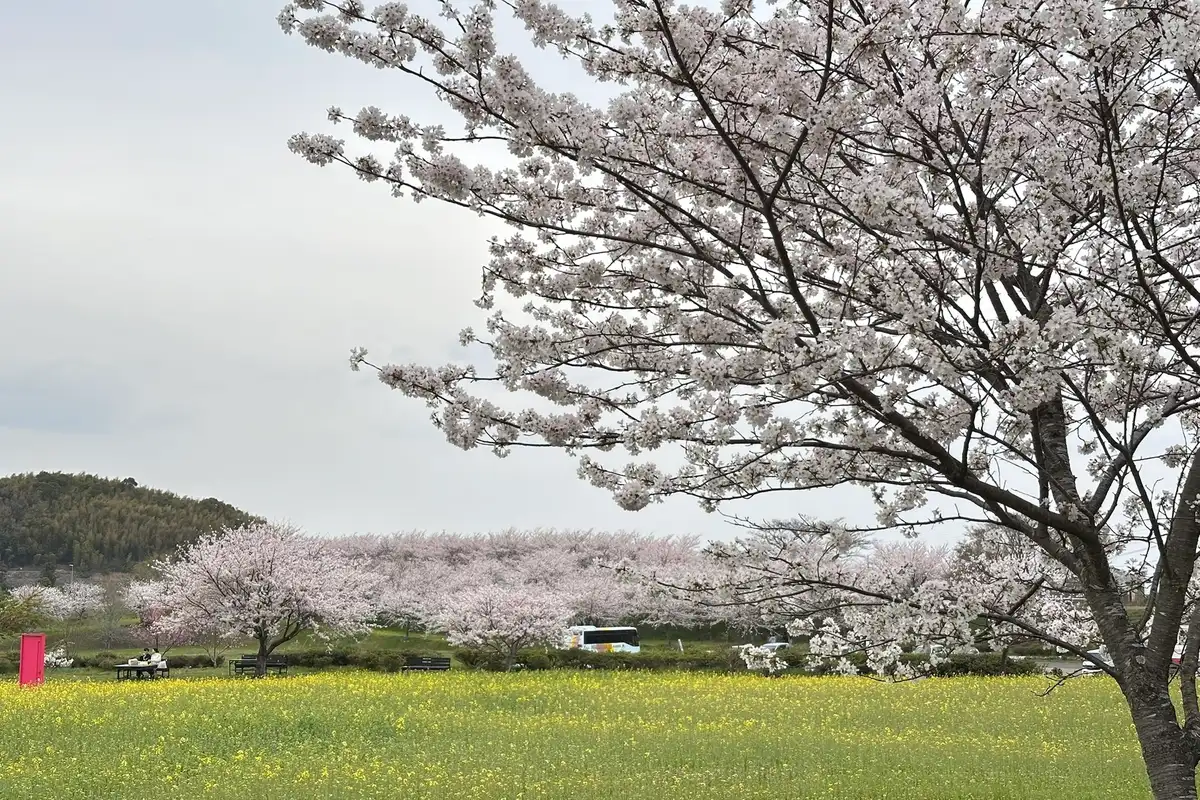
Departure is a little later this morning, so there is time for an onsen bath before you leave. Suizenji Jojuen in Kumamoto is just under an hour away. Hosokawa Tadatoshi, lord of Kumamoto from 1632, created this garden around a spring-fed pond, with a small hill shaped like Mount Fuji. There is about an hour to walk under its cherry trees.
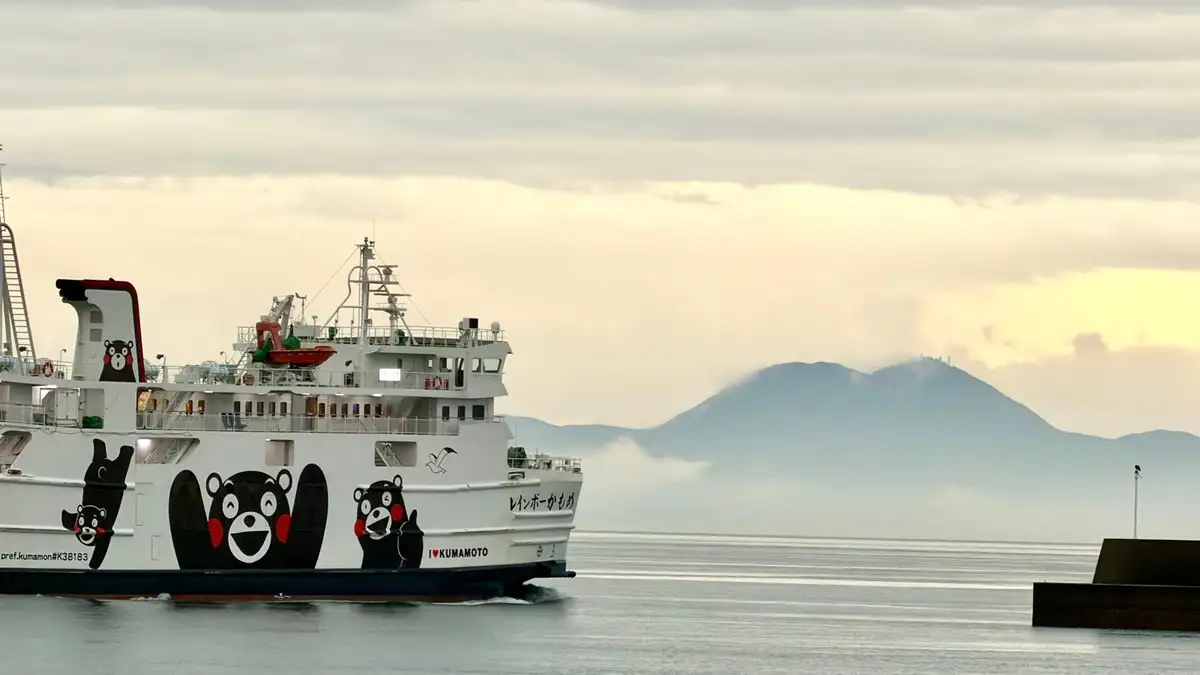
After lunch on the way to Kumamoto Port, the group boards a ferry for the one-hour crossing to Shimabara. Guests often stand on deck in the sea breeze, and some feed the seagulls.
Hibariyama Flower Park lies below Heisei Shinzan, the newest peak of Mount Unzen. From late March, its cherry trees and about 10 million yellow rapeseed flowers usually start to bloom, and the pink and yellow together make it a popular place for photos. The park is on a hillside, so its paths slope.
Our guides say the highlight of the day is Shimabara's castle town. More than 50 springs feed the town, and colourful koi swim in its clear roadside channels. Inside the samurai houses, you can see the kitchen, guest room and garden. At Shimeiso, a house from the early 1900s, guests sit on the tatami beside a pond fed by about 3,000 tonnes of spring water a day.
Hotel Seaside Shimabara faces the Ariake Sea and has an open-air onsen. Early risers can watch the sunrise over the water. Dinner is kaiseki, made by a local chef with local fish and vegetables.
At 9:00, the bus climbs for about 30 minutes to Unzen Jigoku ('Unzen Hells'). Paths link about 30 named hot springs, with bubbling mud and steam at up to 120°C (248°F). Guests usually enjoy walking through the steam, even with the strong smell of sulphur. In the Edo period, Christians were tortured here to make them give up their faith, and a memorial remembers them. If you would rather avoid the hills and steps, there is a flat area by the souvenir shops.
After lunch at a local restaurant, the group reaches Omura Park, about an hour's drive from Unzen. It is the only place in Nagasaki Prefecture on Japan's list of Top 100 Cherry Blossom Spots. About 2,000 trees of more than 20 kinds grow among the stone walls of Kushima Castle, built in 1599. If they are in bloom, look for the Omura-zakura, whose flowers have 60 to 200 petals in two layers. With about 2 hours here, there is time to stroll at your own pace and perhaps try some local sweets.
Ureshino Yadoya opened in 2023, and every room has its own onsen, fed straight from the source. Ureshino's water is known in Japan for leaving skin smooth. The inn has a traditional Japanese style, with new facilities. Each room has a tea set, because Ureshino is a major green tea area, and dinner is kaiseki made with food from within about 88 km.
With a 10:00 start, the morning is relaxed. A tea class five minutes from the ryokan shows how to make good green tea from quality leaves. Guests brew the same leaves with water at 50°C (122°F) and at 80°C (176°F), then compare the taste. Most guests are surprised by how different the two taste. Good tea leaves are on sale there too.
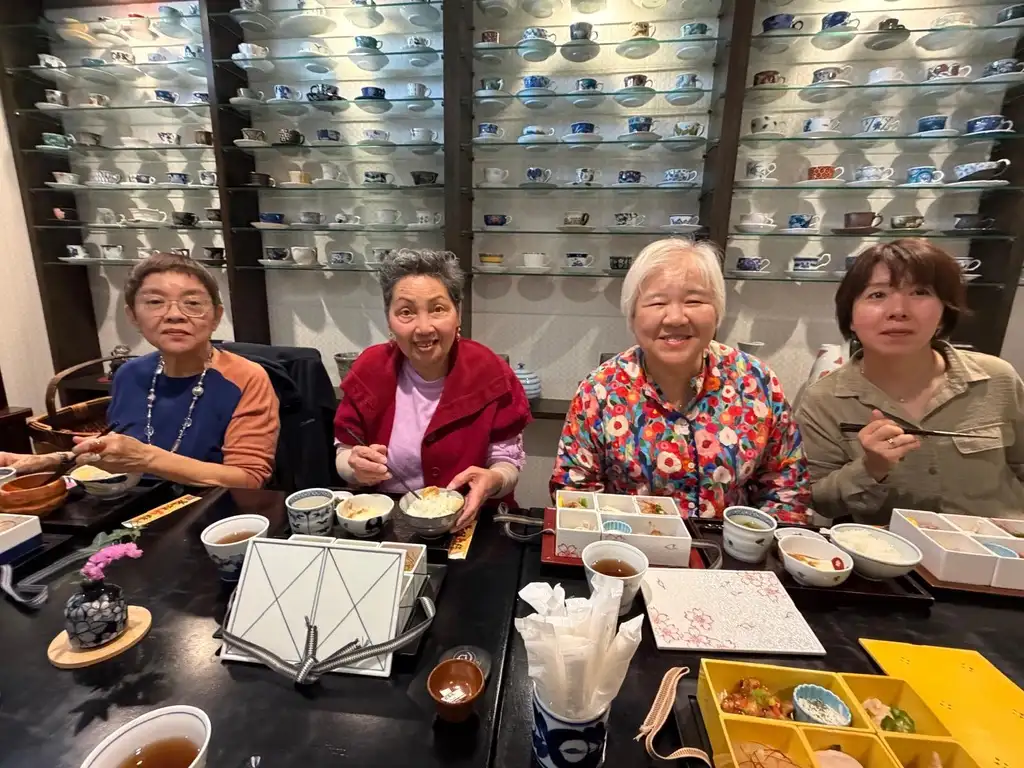
Lunch is at a restaurant in Arita, about 35 minutes’ drive away. Around 2,000 Arita porcelain cups cover its walls, and when you order tea or coffee, you choose the cup it is served in. Most guests enjoy choosing their favourite. The meal features local Arita chicken, served on Arita ware.
Half an hour north, Okawachiyama sits in a valley closed in by mountains on three sides. From 1675, its potters made Nabeshima porcelain for the shogun and the imperial court, and a checkpoint at the entrance kept their methods secret. About 30 kilns still work here, among brick chimneys and bridges decorated with porcelain. Its lanes slope and have some steps. Take your time in the shops that interest you.
The drive back to Fukuoka takes 1.5 to 2 hours, and the evening is free for a last dinner in Tenjin.
The tour ends after breakfast at the Nishitetsu Grand Hotel. Some guests fly home from Fukuoka Airport, while others take the train from Hakata Station to see more of Japan. We can book a transfer at extra cost, or extra nights in Fukuoka on the same payment terms.
Here's what previous participants said...
“Hi, Nellie and I really enjoyed the tour! Everything worked out to our favour! The planning for what we do or see was wonderful! Soyo and driver did a great job! Thank you so much! Cherry blossoms was so beautiful that we didn't get to take a nap in the bus!”
“Many good points: the group is just right. We had an international group of 6 countries, and the pace of the daily tour programs is well planned. Give thumbs up for the varied accommodation — very comfortable and relaxing stay. Started and ended in Tenjin is great!”
“We have enjoyed your tour. The itinerary was well organised and included spectacular Sakura viewing places which we as foreign tourists would not know. All the meals were of a high standard, and the arranged private dining rooms or dining areas are particularly appreciated.”
“We enjoyed the Sakura Tour very much and can't say enough good things about our tour guide. The timing was perfect for us to fully enjoy the cherry blossoms and the meals were stunning.”
“Jimmy and I had an amazing time and experience!! Every experience was so unique and special that it's hard to say which I enjoyed most! Indeed, the hotel we stayed in at the end was fabulous and we ended with a bang!! Kudos to Kyushu Journeys for planning such an amazing itinerary and special experiences!! We are also thankful for meeting everyone on the tour from different parts of the world and we could all get along nicely and shared many conversations and laughter together!”
“The food was exquisite, and we did manage to see cherry trees in bloom. I liked the small group and not having to deal with too many crowds. I had a wonderful time and everything was well thought out and planned. I am telling my friends about Kyushu Journeys and I would like to do another tour with you sometime, maybe the Autumn one.”
“The food was delicious through and through and varied. The dinner on day 3 in Shimabara was a special highlight, with the chef and his mother coming out to greet us at the end. I like how the hotels got better towards the end, we really ended the tour on a high note. The pace of the tour was well balanced, we got to see many things during the day, didn't feel rushed on visits and still had time to unwind in the evening.”
“What to say about our trip to Kyushu. It was an unforgettable experience, informative and enjoyable also. The places we stayed were excellent, my favourite being the lodge in the trees at Ureshino. Everything there is quiet and beautiful. I loved all the food experiences. We had some amazing meals in lovely settings. The size of the tour was just right. You can interact with others if needed or be on your own if that's what you need. The places we went to in Kyushu were also interesting and varied.”
“Thank you for a very memorable holiday in Fukuoka. There were so many Sakuras everywhere.”
“I was attracted to this tour because it visited some less visited spots on Kyushu. The tour delivered. I liked the slower pace and the places we visited had more Japanese visitors than overseas tourists. Cherry trees were found in all stages of bloom and there were many many more than I expected. Particularly liked the Fukuoka festival around the castle ruins. Good balance of guided and free time. Plenty of time to enjoy onsen. Keeping the same bus throughout the trip was very convenient — especially the time I forgot my bag on it.”
Kyushu Cherry Blossom Tour FAQs
Find answers to your most pressing questions about our Cherry Blossom Group tour.
Yes. The tour suits older travellers, couples, friends travelling together and families with children aged 12 and over. The bus leaves at 9:00 or later each morning, and the evenings after dinner are free for rest or an onsen bath.
On guided days, you walk about 2 to 4.5 km a day, mainly on town streets, garden paths and park lawns. Day 2 and Day 4 have the most walking, at up to 4.5 km. The steepest parts are the stone steps down through the torii at Ukiha Inari Shrine on Day 2, the sloping paths at Hibariyama Flower Park on Day 4, the ups and downs at Unzen Jigoku on Day 5, and the steps and sloping lanes of Okawachiyama on Day 6. Steps are optional at most stops. At Ukiha Inari Shrine, for example, the bus takes you to the top, so you only walk down. At Unzen Jigoku, you can stay on the flat area near the shops. If you would like to rest at any stop, you can wait on the bus or sit on a bench in the gardens and parks.
We can't promise full bloom, because the blossom comes at a different time each year. Our guides chose the 2028 dates by looking at when the trees bloomed in past years. Each day also includes several places with cherry trees. If one place is too early or too late, your guide takes the group to another nearby, such as a place with weeping cherries or mountain cherries, which bloom at different times. Omura Park, on Day 5, has more than 20 kinds of cherry tree, and its usual blossom season runs from late March to mid-April.
Our guides keep to this itinerary wherever they can. However, the route, hotels and restaurants may change for reasons outside our control. Your guide may also change the order of a day because of the weather, traffic or where the blossoms are at their best. For example, the Aso crater closes when volcanic gas levels are high. If that happens, you still see the caldera and the Kusasenri grassland. The tour goes ahead in all weather when it is safe. Rain is common at cherry blossom time, so in heavy rain your guide replaces outdoor stops with indoor ones nearby, such as the shops near Akizuki instead of the castle road.
Every room has a private bathroom. You spend two nights at the Nishitetsu Grand Hotel in Fukuoka, one each at onsen hotels in Hita and Shimabara, and one each at ryokan in Aso and Ureshino. The hotels have western beds. At the ryokan, rooms may have western beds or futons (thick mattresses) laid on tatami (woven straw mats). If you can't sleep on a futon, please tell us when you book, and we will ask for a room with beds.
An onsen is a bath filled with natural hot-spring water, and all four places you stay outside Fukuoka have one. Shared baths are separate for men and women, and you bathe without swimwear after washing at the showers. To bathe privately, you can use the onsen in your room at Kizantei Hotel and Ureshino Yadoya, or the private baths at Oyama Ryokan. You can also choose not to bathe at all. Tattoos are not allowed in most shared baths in Japan. Many baths accept a small tattoo covered with a plaster, and private baths are usually fine, sometimes for an extra fee. If you have a tattoo, let us know when you book, and we will check the rules at each hotel.
Breakfast is included every day, along with five lunches and four dinners. Our team chooses each restaurant for its local food. Meals include steamed eel on Day 2, a tofu lunch on Day 3 and kaiseki dinners at both ryokan. Water or Japanese tea comes free with included meals, and you can pay for other drinks on the spot.
We can cater for most dietary needs, including vegetarian and mild allergies or intolerances. Please tell us about any dietary needs when you book, and we will contact you to confirm what is possible. This tour is not suitable for guests who follow a strict vegan diet or have severe allergies, but please contact us and we will try to find another option for you.
One medium-sized suitcase and a small day bag per person works best. The bus has room for your cases, and your driver loads and unloads them each day. Hotels do not provide a porter service as part of the tour, but staff will help if you can't carry your own bag. If you bring a larger case, you can leave it free of charge at the Nishitetsu Grand Hotel on Day 2 and collect it on Day 6.
After breakfast, the group meets the guide in the hotel lobby. The bus usually leaves at 9:00, a little later on Day 4 so you have time for a morning onsen, and at 10:00 on Day 6. Each day has several stops, with lunch on the way. Some stops include free time, such as 30 to 40 minutes in Hita's old town and about 2 hours in Omura Park. After dinner, the evening is yours. Guests often ask what to buy at each place, so your guide suggests local products along the way.
Yes. Guests travelling alone are welcome, and guests often become friends during the week. Your guide sets up a WhatsApp group, where guests share photos and stories each day. A room of your own costs an extra ¥160,000.
The group has no more than 12 guests, and the bus has at least 21 seats, so everyone has plenty of room, including your guide. Your guide lives in Kyushu and holds a national licence, and the group keeps the same guide and bus from Day 2 to Day 6. The whole week is spent in one region, with time at each stop instead of long days on the road between Japan's large cities.
We are based in Fukuoka and have run tours in Kyushu since 2018. The guides who lead this tour also help plan it, from choosing the dates to checking which days each restaurant is open. When you contact us, you speak to the team that runs your trip, and if anything needs to change, we can change it ourselves. You can read more about our team on our About Us page.
Cherry blossom tour price and booking
The Kyushu Cherry Blossom Tour 2028 costs ¥465,000 per person, based on 2 guests sharing a twin or double room. If you would like a room to yourself, the single supplement is ¥160,000, so the total for one guest is ¥625,000. Three guests can also share a room, at the same price per person and with no single supplement. You can choose a triple room when booking. At the Fukuoka hotel, a group of three may need two rooms, and at the ryokan, one guest sleeps on a futon.
To book, pay a 20% deposit. Your place is then confirmed, and you will receive a receipt for your payment and a welcome email from our team. We will email you an invoice for the remaining 80% balance, with a secure payment link, 60 days before your departure. All payments are processed securely via Flywire, a globally trusted international payment platform.
All guests must have travel insurance that covers medical emergencies and cancellation. We can also book extra nights before or after the tour, on the same payment terms.
Cancellation charges
After payment of deposit: 20% cancellation charge (forfeit of deposit)
- 60–46 days before the tour begins: 30% cancellation charge
- 45–31 days before the tour begins: 40% cancellation charge
- 30–16 days before the tour begins: 60% cancellation charge
- 15–8 days before the tour begins: 80% cancellation charge
- 7 days or fewer before the tour begins: 100% cancellation charge
Is my booking protected?
Yes. We're a travel agency registered with Fukuoka Prefecture (Category 2, No. 2-873), and under Japanese law we hold an ¥11 million bond to protect customers' payments. Our Lifetime Payment Guarantee also covers you if your plans change.
What's included in the Kyushu Cherry Blossom Tour
Included
- Six nights' accommodation, including two nights at ryokan, with breakfast every day
- Five lunches (Days 2 to 6) and four dinners (Days 2 to 5)
- A licensed English-speaking guide from Day 2 to Day 6
- Travel by private bus from Day 2 to Day 6, and the ferry from Kumamoto to Shimabara
- All entrance and activity fees on the itinerary
- Sake tasting in Hita and a green tea class in Ureshino
Not included
- International flights
- Travel insurance, which you must have
- Travel between the airport or station and the hotel (we can arrange this at extra cost)
- Lunch and dinner on Day 1, and dinner on Day 6
- Drinks, except water or Japanese tea with included meals
- Souvenirs, tea leaves, pottery and other personal spending
- Porter fees and tips (tipping is not expected in Japan)
- The single room supplement
Cancellations and our Lifetime Payment Guarantee
If you can't travel, you can cancel under our normal booking terms or postpone and keep your payments as a Lifetime Credit. You can use it for any future Kyushu Journeys tour, whenever suits you. We only deduct costs we can't recover, such as hotel charges within about two weeks of your arrival.
Questions before you book the cherry blossom tour?
If you would like to ask about rooms, walking, food or anything else before paying the deposit, send us a message. Let us know how many people are travelling, and our team in Fukuoka will reply.

